Welcome Guys

Tampilkan postingan dengan label Thoughts. Tampilkan semua postingan

Thought: What the N9 Could Mean for Nokia's Sea Ray and other Windows Phones

Written By Penulis on Minggu, 26 Juni 2011 | 15.56


It was the shot heard 'round the world: on Thursday, Nokia unveiled the N9 to the world with little warning. It has certainly rocked the tech industry to its core and only now have we been able to absorb everything thanks to the initial shock finally wearing off. But you know what's even more shocking? It actually looks good.

The N9 is not only Nokia's first truly serious smartphone since arguably the N95, it's also the first tangible item to come from the company's sidelined MeeGo venture with Intel. That coupled with the impressive nature of the phone has lead to the aforementioned shock--that Nokia could actually create what looks to be an awesome phone with an OS everyone assumed would be DOA.

While some are confused as to why Nokia announced the N9 when it's supposed to unveil its first Windows Phones any day now, we don't think the N9 is just a coincidence. There are many things we see in the N9 that could eventually come to the company's Windows Phones (the Sea Ray seemed like a hype-building tease to us), and to say that our excitement has leaped upwards by more than a few notches would be a pretty massive understatement.

'Swipe'
This is the big one. Definitely one of the most impressive qualities we've seen in the N9 so far is its innovative and astonishingly simple UI layer on top of the MeeGo goods inside. The company has dubbed the interface as 'Swipe' and it's core interface is really just that: swiping your finger across the screen. Nearly every major interaction with the phone, from switching apps to checking your notifications, is controlled by the new gesture interface.

Now don't get the wrong idea; as much as we like the Swipe UI it probably won't be translated in its entirety to a Windows Phone. That being said, we think there's still plenty of areas Nokia could implement Swipe to make Windows Phone a little more gesture friendly. Of course this leverages the murky-but-still-confirmed fact that Nokia would be able to make deeper customizations to the operating system than other OEMs thanks to their agreement with Microsoft.


One obvious implementation would be the lock screen, and it would probably be the simplest to do on Nokia's end. For those unfamiliar, watch the hands-on video above from Engadget. Another area I'd like to see Swipe in action is maybe switching between applications for multitasking. Holding down the back button, while simple, is not exactly intuitive and the operating system never suggests that the action is even there (exactly the same issue as iOS). However if Swipe were to be used for application switching it would make more sense since you're literally swiping away from one thing to do another. For example, swiping from side-to-side would directly jump to the next/last app, while a swipe from the top-down could activate the normal 'Cards' view (swiping from bottom to top may work too, but if there are hardware buttons then it could cause some headaches). Those two additions alone, the easy lock screen and multitasking, would definitely justify Swipe moving over to Windows Phone.

Hardware
You may find this amusing, but we actually began writing this article right after the N9's announcement...which was before the Sea Ray showed up and ruined our speculation fun. That said, there's still plenty to take away from the N9's beautiful (and official) hardware that we could see in the Sea Ray and Nokia's other Windows Phones.


First of all, we know that the Sea Ray will be largely similar in design to the N9. Therefore we can assume it will have the same 3.9" AMOLED display, that curved Gorilla Glass on top, quadband GSM and pentaband 3G support (we'll come back to that later), 16 GB and 64 GB capacity options, support for HSDPA up to 14.4 Mbps (i.e. HSPA+ aka "4G"), an 8-megapixel Carl Zeiss camera sensor with dual-LED flash, and possibly the 1 GB of RAM if Microsoft allows it. Now to make a note about that pentaband 3G, it means the unlocked version of the Sea Ray could likely be used on any carrier in the world; carrier-specific versions are different, but if Nokia is smart they would avoid that hassle. Now there is some fine print to this: typically the 3G modems of a device are on a single chip for smartphones, and because the Sea Ray will almost definitely not use the Texas Instruments OMAP 3630 processor that the N9 does it could mean pentaband 3G won't make it to their Windows Phones. Same thing goes for the N9's  HSPA+ and 1 GB of RAM.

Another hardware feature of the N9 we'd love to see make the transition to Sea Ray or other devices would be the front-facing camera. We've also heard a rumor that front-facing cameras would be present in all of the next wave of devices. Plus, if Microsoft is determined to make their Skype Phone we'd imagine a front-facing camera would be mandatory so as you can see there's plenty to suggest the feature will make the leap.


A hardware feature we haven't mentioned in the above list is one that's not quite big yet but has plenty of potential to become an industry standard: NFC (near-field communications) support. In simplistic terms, think of it as a low-energy, super-simplified Bluetooth and you'll get what it is (for more detailed info, read here). We've never found some of NFC's common uses very interesting, but Nokia has done some truly awesome work for the N9's support of the feature. As you can see in the video above, Nokia has introduced a new "Play 360" portable speaker and it's highlight feature is the stupidly-easy NFC connection mode. We've seen hands-on videos of this in action, and it's the same as the ad above: all you do is literally tap the N9 to the top of the speaker and that's it. No Bluetooth menus or waiting to connect--it's very slick. There's also a good chance we actually will see this and more NFC magic thanks to rumors hinting NFC will be supported in the next wave of devices. We would love to see the Sea Ray and Nokia's other Windows Phones make real use of the currently useless feature, and thanks to Mango it could really happen.

The MeeGo Conundrum
So why the heck is Nokia coming out with a MeeGo flagship when they've already committed to Microsoft? It's a very confusing situation, but most popular guesses are that the N9 was so deep into development that the higher-ups decided to just complete the device in order to gain anything from that spent R&D money. Recent comments from Stephen Elop have proved as much, saying that the company still would not commit to MeeGo even if the N9 proved successful. That certainly has puzzled a lot of people, but there's a pretty good reason for that. Shortly after Nokia announced their Microsoft partnership, Stephen Elop was making the interview rounds and stated that they were only on track to possibly release a single MeeGo phone in 2011. That's about as disastrous as you could think and even though some may argue Nokia's flagships are all they need, not everyone can afford a cutting-edge device and the company found a ton of success after pioneering the cheap smartphone in Symbian's glory days against Windows Mobile.

MeeGo was an incredibly ambitious and critical project for Nokia, but it also took too much time and now sadly the operating system has fallen to the back burner. In the meantime, Nokia is moving forward with Windows Phone in order to actually, you know, make money and to restore some of the damage the company has suffered from recently.

So if any of the things we've talked about in this article is what Nokia has planned for its "transition years" with Windows Phone, we are totally okay with that plan.
15.56 | 0 komentar | Read More

Thought: Zune Needs To Get Bing'd

Written By Penulis on Sabtu, 14 Mei 2011 | 12.00


Microsoft isn't doing too well these days when it comes to consumer electronics. Competitors have been attacking the software giant on all fronts, from desktops to laptops to smartphones. What's more, Apple has managed to make tablets a widely-accepted new product category, something Microsoft was attempting to do for several years.

But there's one area where Microsoft has been performing unusually well: Bing. The company has been extremely aggressive marketing Bing to the masses, with tons of TV ads, internet ads and huge sponsorship deals. The search engine is already eating into Google's dominance in the market, and with the integration of Bing into Windows Phone we can only imagine those numbers improving. Microsoft isn't just sticking to Windows Phone for their mobile takeover; they've already released excellent apps for iPhones and Android, iPads, and recently they announced a deep partnership with RIM's future line of BlackBerrys.

There's just one question in the back of our mind that has become louder and louder with Bing's increasing presence: why the heck isn't Microsoft doing this with Zune?

Unlike Bing, you can't find a Zune app for iOS, Android or BlackBerry and one just has to wonder why.
Microsoft has very slowly built up credibility behind the brand since its first device launched in 2006, and one would think that right now is the perfect time to capitalize on it. Microsoft seems to be quite invested in Zune too: besides the Zune HD's lasting love in the tech community, the company also just added Zune support to the Xbox 360, and as you probably already know Zune services are a fundamental part of Windows Phone's multimedia experience. There's also been a level of acceptance from consumers Zune has found that not many other digital media stores have experienced. That's largely due to their killer Zune Pass payment model, which several people have found to be a much more affordable alternative to iTunes and Amazon MP3.

Why does Microsoft need to support other platforms? The answer is simple: Zune is losing.
Clearly Microsoft wants to see Zune succeed, but at the same time it appears the company is completely content seeing Zune stay the same. One issue worth noting is that Microsoft hasn't changed much of the core experience since the launch of the Zune HD, while Apple on the other hand is constantly trying to improve the service and its features. However, the biggest factor holding Zune back is the fact that it's trying to be like Apple: Zune doesn't support outside (non-Microsoft) ecosystems. Unlike Bing, you can't find a Zune app for iOS, Android or BlackBerry and one just has to wonder why. Even the full client of iTunes supports desktop Windows, and yet Microsoft only supports Mac for Windows Phone owners in the form of a feature-devoid 'Connector' application.

Why does Microsoft need to support other platforms? The answer is simple: Zune is losing. If Microsoft truly wants to see Zune succeed in such a competitive market, it's impossible for them to be absent on other platforms. Even if Microsoft just released a Zune app for other platforms with only Zune Pass support, that would be enough to get more people to use it outside of Microsoft's ecosystem. With the added exposure to Zune and Zune Pass, people would be more likely to buy the devices with better integration i.e. Windows Phone and dedicated Zune players. In our opinion, Zune needs to get Bing'd.
12.00 | 0 komentar | Read More

Thought: Who's the Bigger Threat, Apple or HP?

Written By Penulis on Sabtu, 07 Mei 2011 | 16.00


Microsoft has had a tough few months, but its market share losses are slowing down and the general acceptance of Windows Phone 7 as one of the top smartphone platforms have been reassuring signs in their favor. But Microsoft, as if it weren't already bad enough, now has an even tougher journey in the months ahead: they have to contend with their biggest rival and outperform their former ally.

Apple is breaking out of its schedule and Microsoft could suffer severe collateral damage.
Let's start with the former: Apple. There has been a lot of talk that Apple could be launching its next generation iPhone later this fall, instead of their usual Summer timeslot at WWDC. When one of the leading tech giants suddenly changes its pattern, the entire industry takes note because everyone else changes their pattern. Apple is breaking out of its schedule and Microsoft could suffer severe collateral damage. As you may know, Mango (or 7.5) is slated to release this Fall with many predicting a September/October timeframe. But recent rumors about the iPhone 5 also peg Apple to release it around the same time. So unless Microsoft feels extremely confident going into the launch of Mango, they could have a serious problem on their hands: the critical holiday season Microsoft was likely gunning for could now belong to Apple's next iPhone.

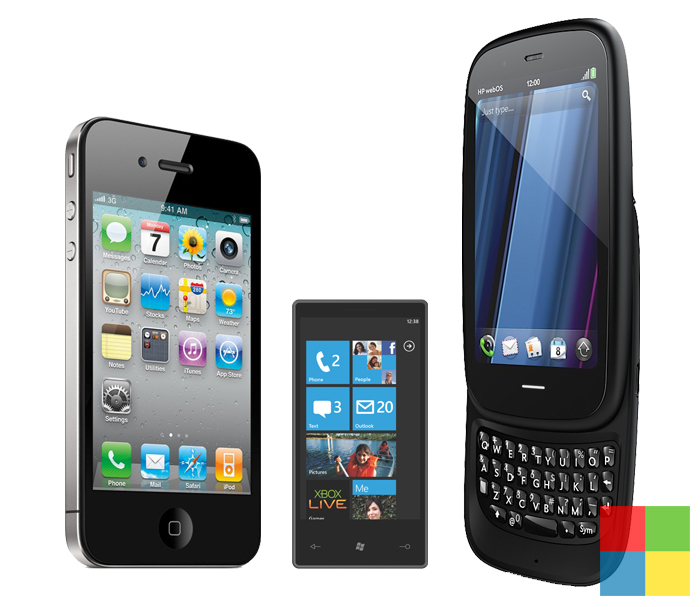
With Apple relinquishing its Summer stronghold, one of Microsoft's former partners could end up benefiting the most. Last year HP purchased Palm, the company behind the struggling WebOS, and has since invested heavily in the hopes for success in a market where they have largely been absent. In February, HP unveiled three new WebOS-powered devices: the diminutive Veer, the competitive Pre 3, and the super-sized multitasking Touchpad tablet. Ignoring the Touchpad, HP will have two smartphones on the market attacking two different market segments. The Veer 4G was just announced for AT&T and is set to launch at $99.99 on a contract and the Pre 3 is expected to launch at the standard $199.99 price by the Summer...and that's exactly where Apple's launch move has helped HP. The company now has a significantly better chance of success with their WebOS devices without Apple sucking the air out of the entire industry.

Microsoft will be absent while their nearest competitor is launching new devices
What's more, WebOS isn't too far away from Windows Phone 7 in U.S. market share and with a successful Summer launch those numbers could potentially leapfrog Microsoft. Ironically, HP was originally announced as a Windows Phone hardware partner and publicly stated it was ready to bring a smartphone to market. But since absorbing Palm, HP has clearly gone back on that pledge and sees more potential for their own platform to compete in the industry. Even without all of that corporate drama, the fact that Microsoft will be absent while their nearest competitor is launching new devices into the market is worrying to say the least.

So now one really has to ask: who is the bigger threat to Microsoft? If Apple's iPhone 5 launch is anywhere in the vicinity of Microsoft's Mango unveiling, it could spell disaster for Windows Phone even if Nokia is at their side. On the contrary, HP also has a lot of potential to catch up and even surpass Microsoft during their expected absence in the now-vacant Summer season. Of course, all of this is speculation based on a widely-spread but unconfirmed rumor and if Apple does stick around in Summer, HP would end up in the hot seat. But either way Microsoft is in a race for mindshare, and Apple and HP are their biggest hurdles yet.
16.00 | 0 komentar | Read More

Thought: Dell is the Odd Man Out

Written By Penulis on Jumat, 29 April 2011 | 13.00


It's not hard to say that the hardware currently available for Windows Phone 7 isn't great. While the OS itself is unique, sexy and exciting, manufacturers seemed hesitant to truly innovate for Microsoft's latest. Some would attribute the lack of manufacturer innovation to Microsoft's rigid hardware restrictions, but at the end of the day we still got leftovers with hot sauce thrown on 'em and OEMs called it "new".

Yet oddly enough, the one manufacturer that has been completely absent from today's smartphone invasion managed to outperform already proven market leaders: Dell. Even more odd is that Dell is the absolute least talked about manufacturer when it comes to Windows Phone news or users, despite some serious love for their hardware. Hell, I've only explicitly talked about the Dell Venue Pro three times total on the site.

So what the heck happened to Dell?

Only a few months after Windows Phone 7 was announced to the world at MWC 2010 and detailed at MIX '10 (and still had the 'Series' appendage tacked on the end), Engadget landed a huge exclusive leak. Dell's tentative smartphone lineup for the 2010 fiscal year was out in the wild and notably featured some handsome Android devices like the Flash, Smoke and Thunder along with Android-powered tablets. But the biggest story of that leak was undoubtedly the Dell Lightning.

The Dell Venue Pro, once upon a time.
Image via Engadget

The phone was drop-dead gorgeous and featured a 4.1" OLED display along with a portrait-sliding QWERTY keyboard. The form factor was unheard of at that size, with the only major modern smartphones utilizing it being the Palm Pre and, a few months later, the Blackberry Torch. The most interesting part? It was powered by Windows Phone 7. Of course you know the end to that fairy tale: the Dell Lightning became the Dell Venue Pro, and it was a launch device for Windows Phone 7 in November 2010.

Or at least that was the plan. Instead Dell suffered from serious quality control issues at launch, and were forced to delay the phone until it reappeared in early December. In hindsight, would the delay really have hurt Dell's chances to make it big with the Venue Pro? To fans of the operating system, maybe, but not to the general public.

The Venue Pro could have potentially become Windows Phone's Droid
No, where Dell really got hurt was the fact that it wasn't selling the phone in stores. Whether Dell couldn't convince a carrier to sell it or they just decided to sell it themselves, in the end that is probably the main reason why no one even mentions the Venue Pro anymore. But in many news outlets' opinions, the Venue Pro could have potentially become Windows Phone's Droid -- the killer phone that represented the OS at its best. Instead we received a cautious approach from a company that couldn't afford to take it so lax, especially being one of the few launch partners of a new operating system from Microsoft. What's even more puzzling is that before the launch, Dell seemed to be taking Windows Phone 7 even more seriously than the other manufacturers. In fact, the company was planning to transition over 25,000 employees using BlackBerrys to the Venue Pro which is certainly a bold move in any industry.

Yet at the end of the day, we're still left asking the same question: what the heck happened to Dell? Even then, another new question has risen: can Dell dig itself out of its own ditch and man up to play alongside the HTCs and Samsungs of the industry? Only time will tell but as far as we can see, there's always a loser and Dell is the odd man out.
13.00 | 0 komentar | Read More

Thought: Should RIM Jump Ship to Windows Phone?

Written By Penulis on Selasa, 26 April 2011 | 12.00


The industry has begun to notice a few signs of trouble recently for Research In Motion, the company behind BlackBerry smartphones. Despite being among one of the largest global market share holders in the industry, innovation has stalled in their product line for a few years now. RIM has attempted to break this pattern by introducing v6.0 of their OS but the Torch, its flagship device, was largely panned by critics and ignored by consumers. Most recently the company released their first foray into tablets with the Playbook, but despite a promising outlook for the touch-based QNX platform the tablet uses, the product still isn't as good as it should be. Not only does RIM have some serious product issues, but their executives have begun to feel the heat from the public. During a recent interview with the BBC, founder and co-CEO Mike Lazaridis abruptly left, claiming that the questions being asked were unfair and that RIM's admittedly high numbers spoke for itself.

Any of that sound a little familiar? Yes, RIM is starting to sound a lot like Nokia and could be facing a serious change in the near future unless their products are significantly overhauled. Just like Nokia, it's hard not to imagine the company seriously considering other platform options at this point in the game. Well, why not Windows Phone 7? The proposition sounds like wishful thinking, but there are some reasons it could pan out. For one, plenty of manufacturers like Samsung and HTC have shown that handling multiple platforms on their devices isn't very difficult and RIM would only have to worry about the hardware part of the equation, which is something they already do very well (despite their outdated designs). For another, RIM wouldn't even have to invest as heavily with Microsoft as Nokia did--instead they could take the cautious approach and only release a few 'test' devices to see how they fare with the public. There is a reason upstart OEMs in the industry are avoiding Android and that's because it requires a significant amount of investment to stay competitive and the market is currently saturated with well-established brands.

RIM could also bring over their Messaging services especially BBM, the sole reason their operating system is still relevant, to those phones which would guarantee sales for those looking for a more touch-friendly OS but still live and die by the popular IM client. Microsoft's Chassis 2 specifications (unveiled at last year's MIX '10) was designed to take on the classic BlackBerry form factor with a vertical QWERTY keyboard and a touchscreen up top. RIM could spearhead development of this Chassis and thus preserve its signature style while still appealing to their users looking for a newer platform.

There is little doubt that RIM is as much the 800-pound gorilla as Nokia is when it comes to the mobile industry, but without any real effort at innovation the company could suffer the slow death Nokia just barely avoided. Microsoft may be the way out.
12.00 | 0 komentar | Read More

Thoughts: Transparency is the Best Policy

Written By Penulis on Jumat, 11 Maret 2011 | 14.00

TransparencyIsTheBestPolicy copy copy

After the deafening noise and confusion coming from fans and the media regarding the partially failed updates and missed launch dates, yesterday Microsoft’s Eric Huarta published an article entitled “Phone updates: process and timing”. But if you read my analysis of the announcement yesterday, you would know that I lovingly dubbed the article “The State of the Updates”.

Whatever you end up calling it, there is no doubt how important the announcement was to subdue the harsh criticisms Microsoft has been facing recently. However this announcement also showed a surprising new side of Microsoft’s Windows Phone strategy: transparency.

While the multinational corporation has always tried to be as transparent as possible with its products, the same could not be said for Windows Phone 7. Since the platform’s launch, there really hasn’t been any sort of contact between Microsoft and the community. Sure there have been isolated events where Microsoft Support may answer some of the community’s questions, but for the most part the Windows Phone division has largely been disconnected from their customers.

Ironic as it may seem, I actually think that was the main reason why people were so frustrated with the company’s efforts so far. There was basically no one to talk to who could be trusted or seen as any kind of authority. This led to a lot of confusion and misinformation spreading throughout the community as well as the media.

That’s why I believe yesterday’s article was important—it dropped the bullsh*t and Huarta did an excellent job of speaking directly to the reader. The announcement could have easily read like the same monotonous press releases we’ve seen before, but instead it had some genuine personality to it and that made a world of difference to me.

While I don’t expect it to happen overnight, maybe Microsoft’s Windows Phone team should consider expanding upon their communication efforts with their fanbase. They already have the platform to do it—the Windows Phone Blog—but they need to up their investment into the platform further. That way we could all avoid the headaches.

Disclaimer: This article is entirely opinionated and the discussion found here should not be confused for our usually unbiased reporting of news.

14.00 | 0 komentar | Read More

Editorial: Xbox Live Needs To Step Up Its Game

Written By Penulis on Selasa, 08 Maret 2011 | 13.30

windows-phone-7-Games-hub-1280px-50p

When someone hears the word, “Xbox Live” what do they think of? Blockbuster action titles like Gears of War? Addictive multiplayer games like Halo: Reach? Features like Netflix or last.fm? Nope. When people think of Xbox Live, they think of the best gaming experience available on the market today.

Xbox Live on Windows Phone 7 is not Xbox Live.

However, that doesn’t mean Microsoft isn’t on the right track. In fact, Xbox Live for mobile actually has a few key advantages over its competitors. Microsoft’s stab at Miis for Xbox have become surprisingly successful. Avatars really bring a gamer’s profile to life and Microsoft has managed to even outperform Nintendo in this area. WP7 does an excellent job with Avatars, but doesn’t provide quite as many options nor any options to purchase accessories. Achievements rock—the system is one of the most ingenious gameplay mechanics a game company has ever come up with and has become a big selling point for Xbox games over their counterparts. Mobile gaming is no exception and once the mainstream gets wind of Angry Birds having achievements, expect some major jealousy. Speaking of Angry Birds, Microsoft recently unveiled their new Must Have Games program for Xbox Live on WP7 and includes that insanely popular Rovio-developed game amongst some more mobile blockbusters like Doodle Jump, Plants vs. Zombies, Sonic The Hedgehog 4 Episode 1 and more.

That all sounds pretty good, right? Well guess what? It’s not enough.

Xbox Live on WP7 is trying to catch up when it should be leading the pack. Microsoft should have come out of the launch swinging with full Live features like Cross-Gameplay Chat, Local Multiplayer, Online Multiplayer, Access to the full Xbox Marketplace, and more. All of those features could work tremendously well with mobile gaming, especially local multiplayer which is definitely a major omission.

Xbox Live on WP7 is trying to catch up when it should be leading the pack.

Even more essential than those features is the main attraction: the games. Microsoft was waving around some pretty pennies in front of developers for ports of major publishers’ games, but they should have been more aggressive than that. Microsoft should have been touting the deep Live integration and also amped up the capabilities of their XNA toolkit. Instead we are seeing the same games that have been on other platforms for months—even years—and Microsoft is still struggling to make a convincing argument over iOS. One of the worst parts about these ports? Publishers, especially big name ones like EA and Namco-Bandai, are pricing them way higher than they should be. This past week’s I Love Katamari was a shocking $6.99—the same price as the amazing Infinity Blade for iOS or even WP7’s own The Harvest. When you compare the price to quality ratio of WP7 games to iOS games, publishers are definitely cashing in on the reputation of Microsoft’s gaming brand.

Now there are familiar competitors emerging that could capture key audiences before Microsoft can even get a no-contract-required WP7 out the door. Nintendo is possibly the largest threat to mobile gaming in general—they offer a gaming platform without requiring a data plan and a significantly lower price for hardware. Their new 3DS has already launched in Japan to massive success and the company is planning to launch in North America on March 27th. Sony, their main competitor in the living room, is also launching their Android-powered Xperia Play this Spring with PlayStation Certified support and will also launch their NGP this Fall, bringing along PS3-like graphics, a capacitive touchscreen, PSN support, real gaming controls, and more. Also, it’s safe to assume that Apple won’t be resting on its laurels and could be boosting the power and mainstream acceptance of their Game Center service for iOS—a direct competitor to Xbox Live on WP7.

So far, Microsoft has a strong safety net thanks to the strength of the Xbox Live brand and the success of the Xbox 360 globally, but now is not the time to stop. They need more features, more exclusive games, and they need to move fast. Xbox Live needs to step up its game.

13.30 | 0 komentar | Read More